
Most American students are familiar with a set of local holiday stories and traditions, from Santa Claus and Rudolph to the ball drop on New Year’s Eve. But there’s a wide world of holiday fun out there—and a lot of it involves healthy fruit!
By bringing these traditions into your schools, you can teach kids something new and encourage healthy habits at the same time. Here are a few fun options to add to your snack times or meal programs. To make them even more meaningful, work with your district’s teachers to share the stories behind them.
Greece and Beyond: Christmas Oranges from St. Nicholas
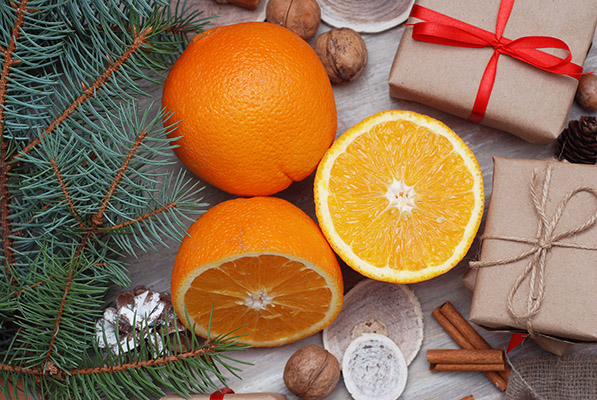
Oranges have long been a staple in Christmas stockings, and the custom may have been inspired by the legend of St. Nicholas—the original Santa Claus. The real St. Nicholas was a fourth-century Greek bishop known for his generosity. Legend has it he learned of a poor old man with three daughters who were unable to marry because they lacked dowries. One night St. Nicholas tossed three bags of gold through their window to help with their financial trouble, and the coins landed in stockings that were hanging near the fireplace to dry.
Over time, the tradition of placing oranges in Christmas stockings to represent the gold coins took hold. Oranges were a luxury item in many parts of the world, making them a fitting symbol of wealth and generosity. Here in the US, gifting oranges and other fresh fruits became popular during the Great Depression, a time when candies, nuts, and fresh fruit were considered rare treats.
You can celebrate this tradition by passing out local oranges at snack time and sharing the St. Nicholas story, or adding them to your meal programs.
Italy: The Christmas Witch Brings Mandarins
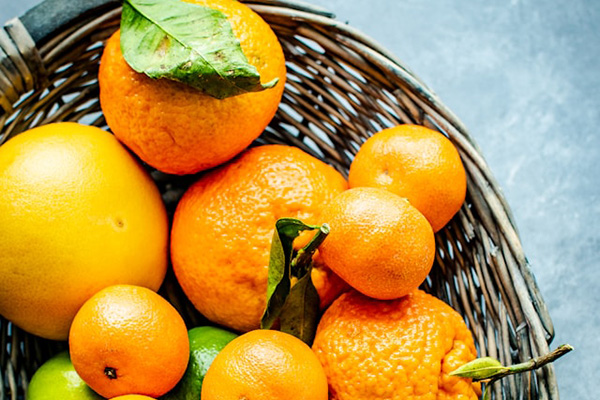
La Befana is a beloved Italian holiday tradition derived from the word epifania, or epiphany. Each year on the eve of Epiphany (January 5) Italian children hang stockings for the “Christmas Witch” known as La Befana to fill with goodies.
The story goes that La Befana encountered the Three Wise Men on their way to visit baby Jesus, but she was too busy doing chores to join them. Later, she regretted her choice and set out to find the holy infant herself, carrying gifts. Although she couldn’t find the stable, she left treats like mandarins and oranges, along with toys and candy, for well-behaved children she encountered along the way.
This is a fun story to share when you include sweet, easy-to-peel California mandarins in your snacks and meal programs.
The US: Bananas, Apples, and Grapes for Kwanzaa
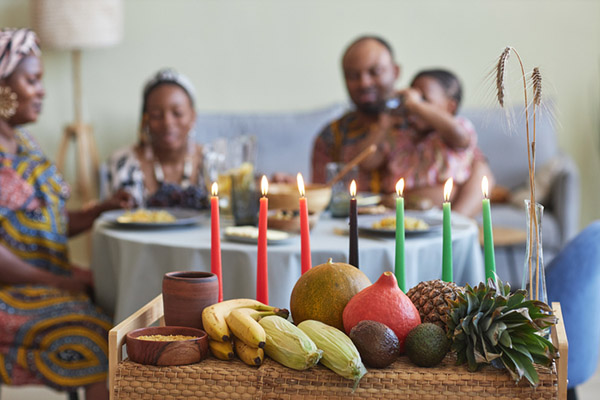
The festival of Kwanzaa, celebrated mainly in the US, takes its name from the Swahili phrase matunda ya kwanza, meaning “first fruits.” Kwanzaa was created in 1966 by scholar and activist Dr. Maulana Karenga to celebrate African American heritage and culture and was inspired by African harvest celebrations.
Observations of Kwanzaa typically involve a table decorated with specific symbols. These include a woven mat called a mkeka, which represents tradition and history, and a selection of fruits and vegetables atop the mkeka, to symbolize the rewards of collective work and labor. This display is known as mazao, and often includes bananas, sweet potatoes, yams, and squash, to represent the African diaspora. Other fruits may include grapes to symbolize abundance and good fortune, or apples to represent knowledge and education.
Consider setting up a Kwanza fruit display in your cafeteria, where students can read the story and snack on the fruit. You could also create a Kwanza-inspired meal featuring sweet potatoes, yams, or squash, with a side of fresh fruit.
Iran and Beyond: Pomegranates for Yalda Night, New Year’s, and More
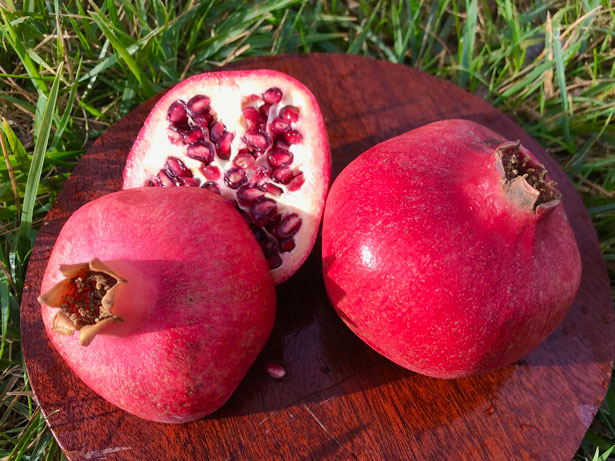
Yalda Night is the Persian celebration of the Winter Solstice and dates back to 502 B.C. Yalda symbolizes the victory of light over darkness, marking the turning point where days begin to grow longer. Friends and family gather to share stories and poetry and enjoy traditional foods, including pomegranate and watermelon. Pomegranates originated in modern-day Iran, and have come to symbolize fertility, light, and goodness. Watermelon serves as a reminder of warmth and vitality and is associated with warding off winter cold.
Greek and Eastern European cultures feature pomegranates in their New Year’s celebrations. But those traditions usually involve smashing the pomegranate on the floor to bring abundance and good fortune—so you might want to skip them in the cafeteria! Instead, you can add pomegranates to a meal or snack, and share that in Brazil, legend has it that eating a pomegranate and keeping seven of its seeds in your wallet or purse throughout the year can bring good luck and prosperity.
Spain: Lucky Grapes for New Year’s

The Spanish have a festive and superstitious custom known as Las Doce Uvas de la Suerte or The Twelve Grapes of Luck. On December 31, as the clock strikes midnight, Spaniards eat a grape with each chime—one for each month of the coming year. If you manage to eat all twelve grapes before the clock finishes striking, you should enjoy good luck and prosperity for the whole year.
In Spain, people congregate in squares and main streets of their towns, including Puerta del Sol in Madrid, to complete the ritual of eating grapes and welcoming the new year. This is a fun tradition to share with students over a snack of sweet, healthy grapes.
China, Vietnam, and Beyond: Lunar New Year Citrus Brings Peace, Wealth, and More
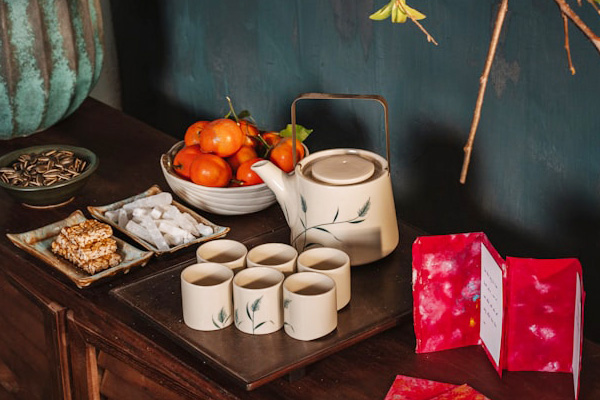
Fruits are a central part of Lunar New Year celebrations in China, Vietnam (where the celebration is called Tết Nguyên Đán), and other Asian countries. They symbolize various aspects of good fortune, prosperity, and longevity. Oranges and tangerines are among the most popular, as their color is associated with wealth and prosperity. Pummelos are believed to offer protection, while apples symbolize peace and harmony. Many families display a platter with various fruits in their homes. Holiday fruit gift baskets are commonly given as presents, and participants may also place fruit offerings on altars as offerings to their deities or ancestors.
To teach students about Lunar New Year or Tết, create a fruit display in the cafeteria or plan a classroom tasting featuring oranges, tangerines, pummelos, and apples. You can order these fruits and more from The FruitGuys Farm-to-School Program for quick and reliable delivery.
This article was originally written for fruitguys.com by Elisabeth Flynn. It was adapted for The FruitGuys Farm-to-School Program.