
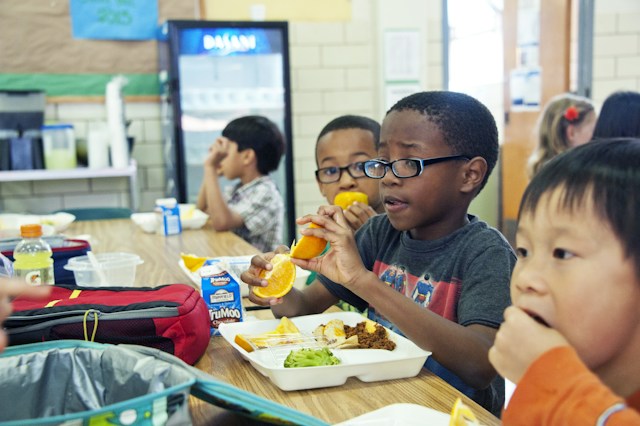
It’s common knowledge that the best nutrition programs in schools feature fresh, local, seasonal produce. But how much does serving in-season fruit and vegetables actually matter? Is it really better for your students if you offer them fresh berries and apricots in the spring instead of apples and bananas year-round?
To find out, we sat down with two nutrition experts: Destin Faria, MHS, RD, LD, a regional dietitian with Cuisines, and Marsha Novick, MD, FAAFP, DABOM, a spokesperson for The Obesity Society. They both agreed that seasonal produce has significant benefits for students.
“For children and teenagers specifically, in-season produce [has] unique developmental, behavioral, and physiological advantages,” Novick said.
Why Add In-Season Fruits and Vegetables to Your School Nutrition Program?
Yep, seasonal produce is good for kids—and for more reasons than one! Here are a few of the key benefits our nutrition experts highlighted.
1. They’re more enjoyable for students to eat.
Which would you rather snack on: a crisp, crunchy, bright-green snap pea or a slightly wilted piece of lettuce that’s crossed the world in a plastic bag? Students feel the same way.
“In-season produce is often at its best in terms of flavor, appearance, and texture,” Faria said. “Those qualities matter in schools because students are more likely to eat a fruit or vegetable when it looks appealing and tastes good.”
Novick agreed, adding, “Because children possess sensitive palates, they are more likely to accept and enjoy new fruits and vegetables if they are fresh, vibrantly appealing, and naturally sweet rather than bland or mealy.”
2. They’re nutrient-dense.
Produce starts losing nutrients the second farmers pick it. So the faster a carrot or cluster of grapes travels from the farm to your students’ cafeteria trays, the more nutrient-dense it will be. Seasonal produce often scores well here because it’s more likely to be local and fresh-picked than imported or pulled from cold storage.
“Eating in-season produce offers definitive health benefits because fruits and vegetables harvested at peak ripeness retain the maximum possible number of vitamins, minerals, and cell-protecting antioxidants,” Novick explained.
She pointed specifically to the phytochemicals in fruits and veggies like anthocyanins, carotenoids, and polyphenols, which can support brain health, heart health, and more.
3. They help students grow.
Because seasonal produce is often more nutrient-dense than imported, out-of-season produce, it can be more beneficial for students’ growing bodies.
“Children and adolescents experience rapid cellular division and bone growth. In-season greens and root crops retain higher levels of folate, which is essential for metabolism and DNA synthesis, and vitamin K, which is crucial for bone growth,” Novick said.
4. Eating seasonally means eating variety.
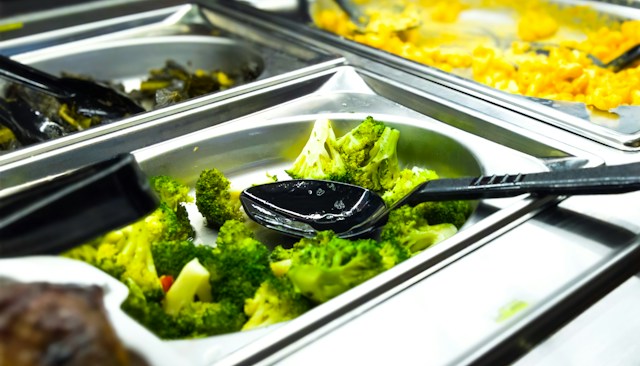
Eating a variety of fresh fruits and vegetables is one of the best ways for students to boost their health, and choosing seasonal produce means that variety is built in.
“Seasonal menus also create natural variety throughout the year. Students might experience strawberries in the spring, tomatoes and peaches in the summer, apples and squash in the fall, and citrus or leafy greens in the winter. That variety exposes students to different nutrients, colors, textures, and flavors,” Faria said.
5. They may have fewer chemicals and preservatives.
Every farm uses different farming practices, so this isn’t universal, but it’s possible that serving seasonal produce could help limit students’ exposure to the endocrine-disrupting chemicals (EDCs) found in some herbicides and pesticides.
“Produce grown outside its natural season typically relies more heavily on post-harvest waxes, preservatives, and artificial ripening gases to survive global freight. Buying local, seasonal produce limits a teenager’s cumulative exposure to external synthetic chemicals and preservatives during a critical window of hormonal development,” Novick said.
Research into EDCs is still ongoing, but they’ve been linked with several health issues. If you’re concerned about synthetic pesticides and herbicides, you can also choose organic produce for your school lunch programs.
6. They may be more affordable.
Produce is abundant when it’s in peak season—and as the rule of supply and demand goes, when something is abundant, it’s more affordable! This may not be true for unique seasonal items (think things like Ojai Pixie tangerines, which are small crops only available for a short time), but it’s typically the case for larger crops like apples, pears, and oranges. Buying and serving them in season can often save you money in the long run.

Can’t Do 100% Seasonal Produce? No Worries
School nutrition programs operate on tight budgets, so you might not be able to serve fresh in-season fruits and vegetables with every meal. That’s okay! Even adding just a few seasonal items to your meal programs and snacks can make an impact, and produce that’s frozen or canned can still be a nutritious choice.
“Perfection should not become the enemy of progress. Fresh, frozen, canned, local, and nonlocal produce can all have a place in a strong school nutrition program. The ultimate goal is to make fruits and vegetables familiar, appealing, accessible, and enjoyable so students build eating habits they can carry into adulthood,” Faria said.
Where to Buy In-Season Fruits and Vegetables for School Meal Programs
The FruitGuys Farm-to-School Program is a great source of in-season fruits and vegetables for snacks, lunch programs, and more in schools. We partner with more than 70 farms nationwide—including small, organic, and best-practice farms in California—to bring students a wide variety of local, seasonal, and unique items.
To find out if we can deliver fresh, in-season produce to your students, just fill out this quick form to tell us more about what you need.